
If you’ve never had your septic tank pumped, or can’t remember the last time, it helps to know what the visit looks like. Here’s what happens from the phone call to the moment the truck pulls away, and what you can do ahead of time to make it go smoothly. It’s written for homeowners in Union, Stanly and Mecklenburg counties, where red clay, older lots and a mix of conventional and engineered systems all shape how a pump-out goes.
Why septic tanks need pumping at all
Everything that leaves your house flows into the septic tank. Heavy solids sink as sludge, grease and lighter material float as scum, and the clearer liquid in the middle flows out to the drainfield.
Bacteria break down some of those solids, but not all. Over time the layers get thicker, and eventually solids can be pushed into the drainfield lines. That’s where the expensive problems start.
The U.S. Environmental Protection Agency says household septic tanks are typically pumped every three to five years, and that a tank should be pumped when the sludge and scum take up more than about a quarter of the liquid depth (EPA: How to Care for Your Septic System). Your schedule depends on household size, tank size and habits like using a garbage disposal. For more on timing, see our septic tank maintenance guide.
Before we arrive: how to get ready
Know roughly where the tank is
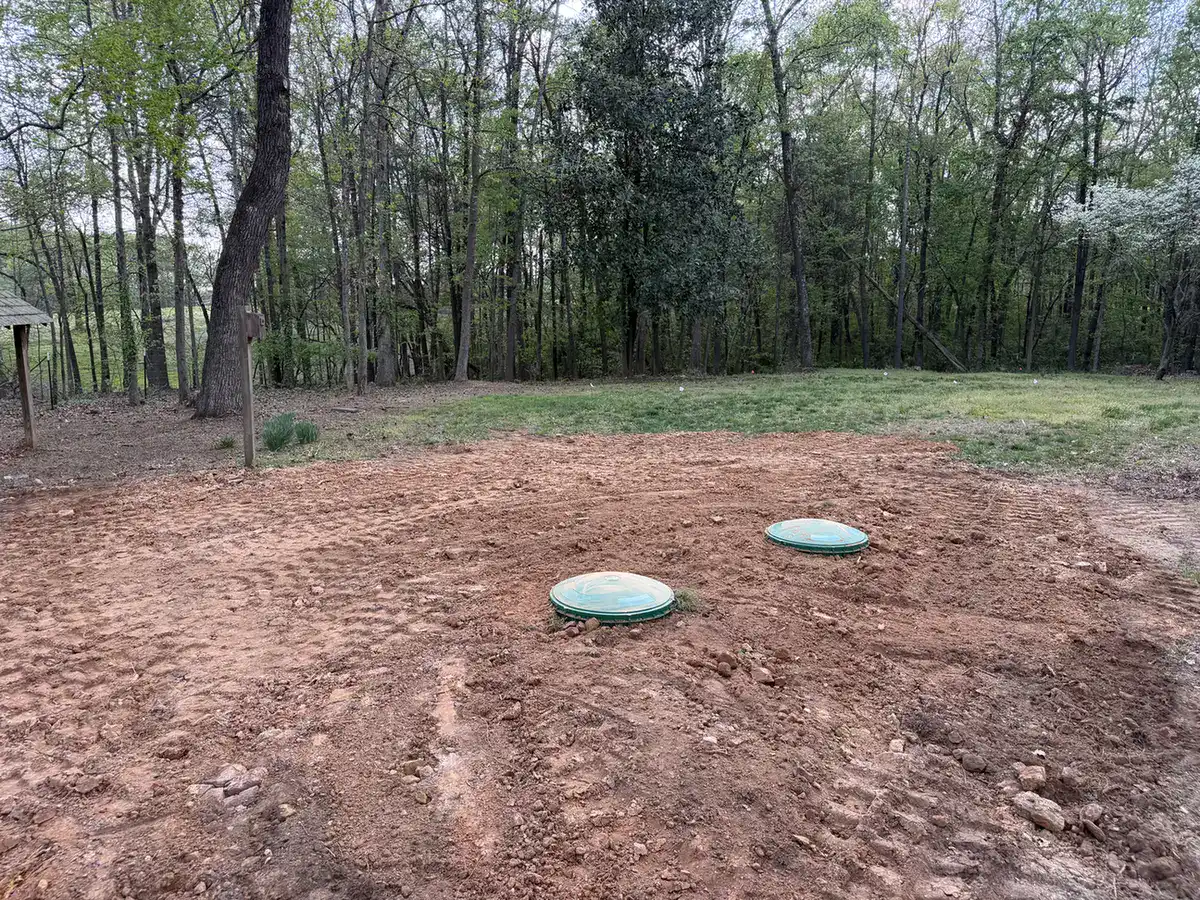
The biggest time saver on pumping day is knowing where the tank lids are. Newer systems often have green or black riser lids at ground level. Older systems may have concrete lids buried under soil or grass.
If you’re not sure where yours is:
- Look for the original permit or system drawing. Your county environmental health office usually keeps these, and our guide on finding septic tank records online in North Carolina walks you through it.
- Check your inspection report or closing paperwork if you bought recently.
If you still can’t find it, that’s fine. We locate tanks by probing and, when needed, with a sonde, a small transmitter we send down the line and trace from above ground.
Clear a path for the truck and hose
Before the visit:
- Move cars, trailers or equipment out of the way of the driveway and side yard.
- Unlock any gates between the driveway and the tank.
- Keep pets inside or away from the work area.
- Tell us about soft ground or a tight turn. Heavy trucks shouldn’t drive over a drainfield, and wet clay ruts quickly after rain.
Have a few details ready when you call
When you book online or call, it helps to know:
- Whether your system is a conventional gravity system or an engineered system with a pump tank, such as a low-pressure pipe (LPP) or drip system.
- Roughly when it was last pumped, if you know.
- Any symptoms: slow drains, gurgling, odors, wet spots in the yard or an alarm going off.
- Whether you’re selling or buying the home. A home sale usually calls for a septic system inspection, and a pump-out can be added to it.
On pumping day: what we actually do
1. Find and open the tank
We confirm the tank location, dig down to the lids if they’re buried, and open the access ports. Some tanks have two compartments, so there may be more than one lid.
2. Take a look before pumping
Before the tank is emptied, we check the scum and sludge layers, the liquid level, and the inlet and outlet baffles. A liquid level that’s higher than it should be can point to a problem past the tank, like a backed-up line or a struggling drainfield.
3. Pump the tank
We run the vacuum hose into the tank and pump out the liquid, scum and sludge, so the tank is emptied, not just skimmed.
4. Check the parts you can only see when the tank is empty
With the tank empty, it’s easier to spot cracks, damaged baffles, roots or a broken effluent filter. If something needs attention, we’ll show you and explain your options, and we can run a camera through the lines if needed.
5. Close everything back up
We replace the lids, backfill any soil we moved and leave the area as close to how we found it as we can.
Engineered systems with a pump tank have more moving parts, and the EPA notes that systems with pumps and float switches generally need inspection more often, usually once a year. If you have an LPP or drip system, ask about our subsurface maintenance contracts.
After the truck leaves
A freshly pumped tank starts filling right away, so you can use water normally. A few habits help it stay healthy longer:
- Spread laundry over the week instead of one day.
- Keep grease, wipes (even “flushable” ones), paper towels and feminine products out of the system.
- Fix running toilets and dripping faucets. Constant water flow pushes solids through faster.
- Keep vehicles, livestock and new construction off the drainfield.
- Write down the date and what we found. The EPA recommends keeping septic maintenance records, and they’re helpful when you sell the home.
Local things worth knowing
A lot of ground in Union and Stanly counties is clay that drains slowly. When a lot can’t support a conventional drainfield, an engineered system such as LPP or drip may be used instead. On slow-draining soil, an overdue tank adds stress to a drainfield that’s already working hard, so standing water over the drainfield in the wet months is a reason to call sooner.
If you’re on septic in Charlotte or elsewhere in Mecklenburg County, the same advice applies. See our Union County, Stanly County and Mecklenburg County pages for the towns we serve.
Frequently asked questions
Do I need to be home when my septic tank is pumped?
Ask when you book. If we can reach the tank and gates are unlocked, being home may not be necessary, but it helps if you want to see the open tank or ask questions.
Can I use water while the tank is being pumped?
It’s best to hold off on showers, laundry and the dishwasher while we’re working, since the tank is open. Once the lids are back on, you can use water normally.
How do I know if my tank needs pumping now?
Slow drains, gurgling pipes, sewage odors, soggy spots over the drainfield or a pump alarm are all reasons to call. Not knowing when it was last pumped is reason enough too.
Schedule your septic tank pumping
Dahl Septic Services is licensed (NC license #9407I), insured, and our team has over a decade of experience pumping, inspecting and repairing septic systems across Union, Stanly and Mecklenburg counties. Learn more about our septic tank pumping service, book online or request a quote.
Call or text (704) 218-9070. We’re open Monday through Friday, 8am to 5pm. After-hours calls, texts and emails are handled based on urgency.
Dahl Septic Services, 214-B E North St, Albemarle, NC 28001
Enhancing Septic System Health
Now that we know why maintenance is crucial, let’s look at some ways to keep your septic system healthy and happy. It’s all about the right care and attention.
Pump Septic Tank Tips
Pumping your septic tank isn’t rocket science, but there are some tricks to doing it right. Here’s what you need to know:
Don’t wait until there’s a problem. Schedule regular pump-outs every 3-5 years, depending on your household size and tank capacity.
Hire a pro. This isn’t a DIY job – you need someone with the right equipment and know-how.
Keep records. Note down when you pump and any issues the pro spots. It’ll help you track your system’s health over time.
Remember, a good pump-out isn’t just about emptying the tank. It’s a chance to inspect the whole system and catch any brewing problems.
Extending the Septic Tank Lifespan
Want your septic tank to stick around for the long haul? It’s all about treating it right. Here are some tips to help your tank last longer:
Be mindful of what goes down your drains. Your septic system isn’t a trash can – only human waste and toilet paper should be flushed.
Watch your water usage. Too much water can overload your system. Fix leaks promptly and spread out your laundry loads over the week.
Protect your drain field. Don’t park on it, plant trees near it, or let water from gutters flood it. A happy drain field means a happy septic system.
Regular inspections are key. Even if you’re not due for a pump-out, having a pro check things out every year or two can prevent big issues.
Preventative Maintenance Strategies
Prevention is always better than cure, especially when it comes to septic systems. Let’s look at some strategies to keep your system running smoothly for years to come.
Septic System Tips for Longevity
Want your septic system to last? Here are some tips to keep it going strong:
Use water wisely. Fix leaks, install low-flow fixtures, and spread out your water usage throughout the day.
Be careful what you flush. No wipes, feminine products, or other non-biodegradable items down the toilet.
Keep your drain field clear. No heavy vehicles, structures, or deep-rooted plants on or near it.
Use septic-safe products. Harsh chemicals can disrupt the bacterial balance in your tank.
Regular professional inspections are a must. They can catch small issues before they become big problems.
Don’t forget to keep detailed records of all maintenance and repairs. It’s super helpful for future care and if you ever sell your home.
Maintaining Septic System Health
Keeping your septic system healthy is an ongoing job, but it doesn’t have to be a hassle. Here’s how to keep things running smoothly:
Pay attention to warning signs. Slow drains, gurgling pipes, or wet spots in the yard could mean trouble’s brewing.
Be smart about landscaping. Avoid planting trees or shrubs with deep roots near your septic system. They can cause major damage.
Use water-saving fixtures and appliances. They’re not just good for your water bill – they help prevent overloading your septic system.
Consider using septic system additives, but only after consulting with a pro. Some can help, but others might do more harm than good.
Remember, a healthy septic system is all about balance. Too much water, harsh chemicals, or neglect can throw things off. With a little care and attention, your septic system can serve you well for many years to come.
Need the tank pumped? Dahl Septic Services offers scheduled septic pumping across Union, Stanly, Mecklenburg and Cabarrus counties, including homes in Stanly County. For more on this topic, read Why You Should Use Dahl Septic Services and Smart Septic Care.