Finding septic tank records NC can feel like searching for a needle in a haystack, especially when you need permits, as-built drawings, or inspection reports fast. Many homeowners and buyers in North Carolina struggle to locate these crucial documents online without wasting time or missing key details. This guide breaks down exactly where to look and how to get the right info, so you can move forward with confidence and keep your septic system in good shape. Learn more here.
Understanding Septic Records in NC
To navigate the maze of septic records in North Carolina, it’s vital to know what you’re looking for and why these documents matter.
Importance of Septic Records
Septic records are essential for maintaining the health of your system. They provide a history of installations, repairs, and inspections. These details help ensure your septic system runs smoothly and meets local regulations. Proper records can save you from costly repairs by catching issues early.
Key Documents to Locate
In your search, focus on permits, as-built drawings, and inspection reports. Permits show legal compliance. As-built drawings detail the system layout, while inspection reports reveal past system health. Finding these documents makes managing your septic system easier.
Common Challenges in Record Retrieval
Finding these records can be tricky. Many counties have different storage systems, and older records might not be digitized. Sometimes, records are incomplete or missing. Understanding these challenges upfront prepares you for a smoother search process.
Navigating Online Resources
Once you understand the importance of these records, it’s time to explore online resources that can help you locate them.
County Environmental Health Portals
Start with your county’s environmental health portal. These portals often house permits and inspection reports. Each county in NC may have a different system, so double-check you’re on the right site. Using this resource saves you from unnecessary trips to county offices.
Using GIS and Permitting Tools
GIS (Geographic Information System) tools can be helpful. They show property maps and sometimes include septic system layouts. Pair GIS tools with county permitting databases for a more comprehensive view. These tools simplify the search by visually mapping out septic locations.
Requesting Missing Records
If you can’t find records online, request them from your local health department. Be prepared to provide property details like address and owner’s name. This step can fill gaps in your documentation, ensuring you have a complete history of your septic system.
When to Call Dahl Septic
Understanding when to seek professional help is crucial for maintaining your septic system’s health.
Recognizing Red Flags
Watch for signs like slow drains, gurgling sounds, or unpleasant odors. These can indicate deeper issues needing expert attention. Recognizing these red flags early can prevent major system failures.
Importance of Professional Inspections
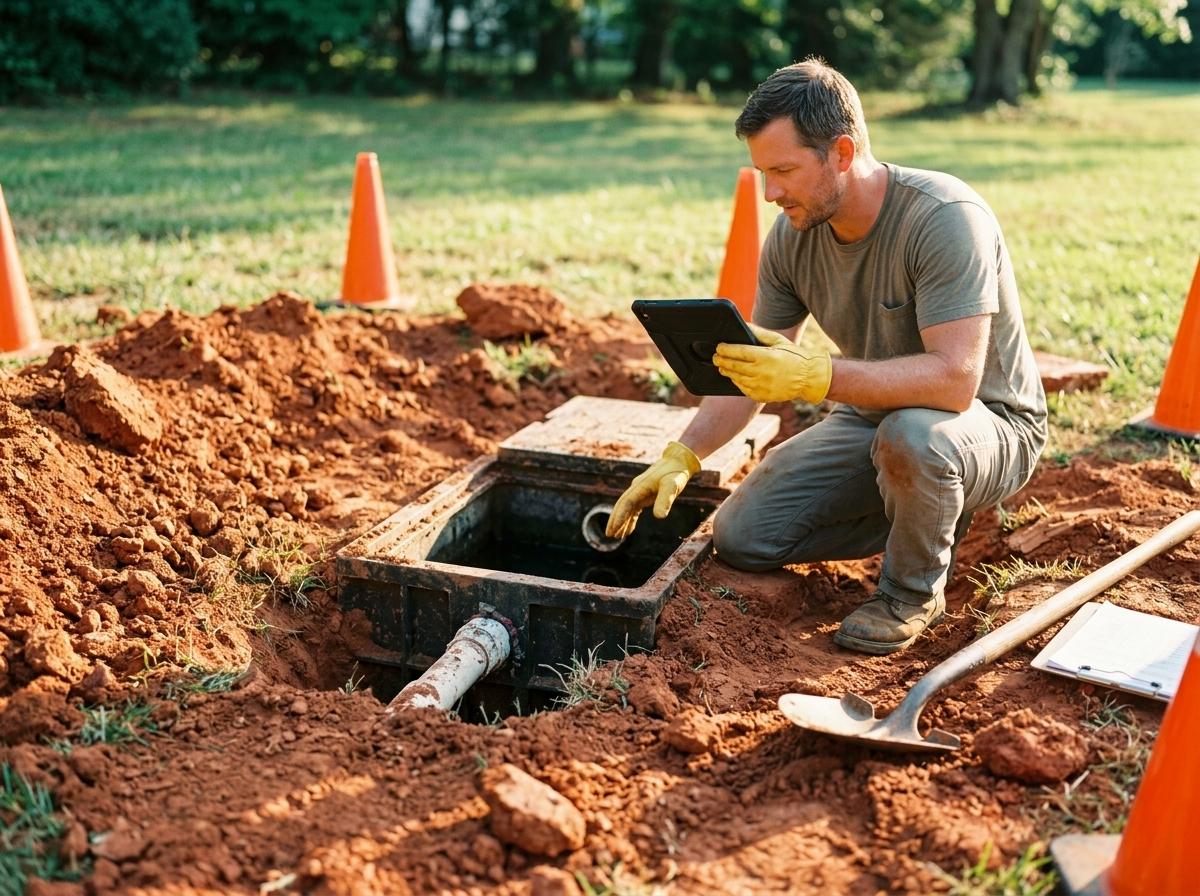
Professional inspections offer a thorough check beyond what records can show. Experts use advanced tools to detect hidden problems, ensuring your system is functioning properly. This proactive approach keeps your septic system in top shape.
Scheduling with Dahl Septic Services
When your septic needs attention, scheduling with Dahl Septic Services is easy. Our team provides reliable service, backed by years of experience. We handle everything from routine maintenance to emergency repairs, ensuring your septic system works flawlessly.
Frequently Asked Questions
How do I find septic tank records in North Carolina?
You can find septic tank records by checking your county’s environmental health portal or using local GIS mapping tools. If online resources fall short, contact your local health department for assistance.
What are septic as-built drawings?
As-built drawings provide a detailed layout of your septic system, showing the location of tanks, pipes, and drain fields. They’re crucial for maintenance and future inspections.
Why are septic inspection reports important?
Inspection reports offer a snapshot of your system’s health, identifying potential issues before they become major problems. They help ensure compliance with local regulations and prolong your system’s lifespan.