Dahl Septic Services · Septic Maintenance
LPP Septic Maintenance and Drip System Care in Union, Stanly, Mecklenburg and Surrounding NC Counties
LPP septic maintenance, plus drip and pump-tank system contracts, handled by a certified subsurface operator, in Union, Stanly, Mecklenburg, Cabarrus, Anson and Montgomery counties, NC.
- Licensed & insured, NC license #9407I
- Founded 2023 · over a decade of hands-on experience
- Inspection reports usually same or next day
Septic Maintenance
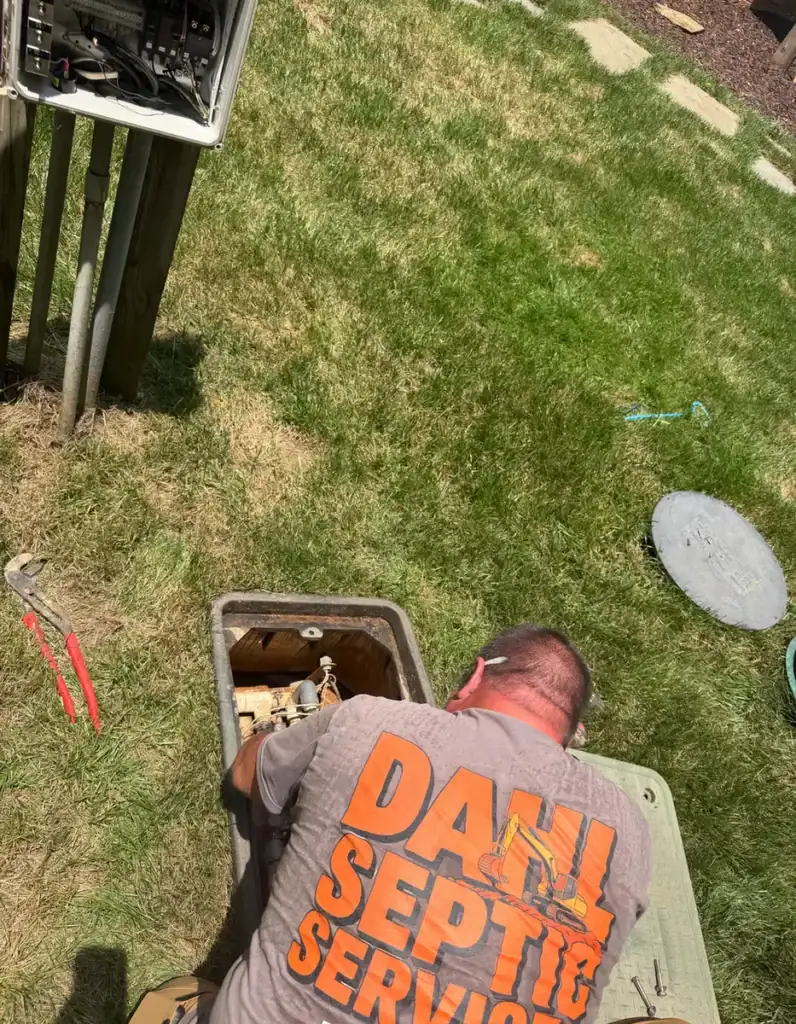
Not every septic system is a tank and a gravity drain field. Where the soil is shallow, rocky or wet, many homes in our area have an engineered system: a pump tank, a low-pressure pipe (LPP) system, a drip system or a pretreatment unit. These systems work well when they’re looked after, but they have pumps, floats, alarms, valves, filters and small lines that a conventional system doesn’t, and North Carolina’s rules require many of them to be maintained by a certified subsurface operator under an operation and maintenance contract.
Dahl Septic Services maintains LPP, drip and pump-tank systems and conventional septic tanks across Union, Stanly, Mecklenburg, Cabarrus, Anson and Montgomery counties. A certified subsurface operator on our team handles the scheduled operator visits and reports. We’re licensed and insured (NC license #9407I), and our owner and team have over a decade of experience in septic work. Call or text (704) 218-9070.
On this page
- Septic maintenance contracts
- What we check on each visit
- Why NC requires a certified operator
- LPP septic maintenance
- Drip system maintenance
- Pump tanks and alarms
- Pretreatment systems
- Conventional septic maintenance
- Warning signs between visits
- Union County
- Stanly County
- Mecklenburg, Cabarrus, Anson and Montgomery counties
- FAQ
Quick facts
Quick facts: septic maintenance
| Topic | Details |
|---|---|
| Systems we maintain | LPP, drip and pump-tank systems, plus conventional septic tanks |
| Pretreatment units | Brand-name units are maintained by the manufacturer or an operator it authorizes in writing (state rule) |
| Operator | A certified subsurface operator on our team, on the certified operator list Union County Environmental Health posts |
| Maintenance contracts | Operator visits as your permit or system requires, with a written report after each visit |
| What we check | Tanks, pump, floats, alarm, control panel, dosing, filters, lines and the drain field |
| NC rules | 15A NCAC 18E, Section .1300 (operation and maintenance) |
| Where | Union, Stanly, Mecklenburg, Cabarrus, Anson and Montgomery counties, NC |
| License | NC license #9407I · licensed and insured |
| Hours | Monday to Friday, 8am to 5pm · call or text (704) 218-9070 |
| Payment | Cash, credit cards and checks |
Maintenance contracts
Septic Maintenance Contracts for LPP, Drip and Pump Systems
If your system needs a certified operator, North Carolina requires a written operation and maintenance contract between you and the operator. A maintenance contract with Dahl Septic Services puts the operator visits, the reports and the paperwork in one place.
What’s included
- Operator visits as your permit or system requires
- A check of the whole system on each visit (see the list below)
- A written report after each visit, shared with you and filed with the county health department as the rules require
- Routine upkeep on site where the system needs it, such as cleaning filters, flushing lines and adjusting floats and pressure
- A clear explanation of anything that needs repair or pumping, and a quote before any repair work
- The paperwork the county asks for, including a copy of the contract
How to start a maintenance contract
- Call or text (704) 218-9070, or book online. Tell us your address and, if you know it, your system type.
- Find your Operation Permit if you have it. It shows how the system is classified and what it needs. If you don’t have it, the county’s septic records may, and we can help you look.
- We check the whole system and write up what we find.
- We set up the contract and the visits your permit or system requires, and give you the paperwork for the county.
Switching operators, or got a letter from the health department about your operator contract? Call or text us, and see the FAQ below.
Each visit
What We Check on Each Maintenance Visit
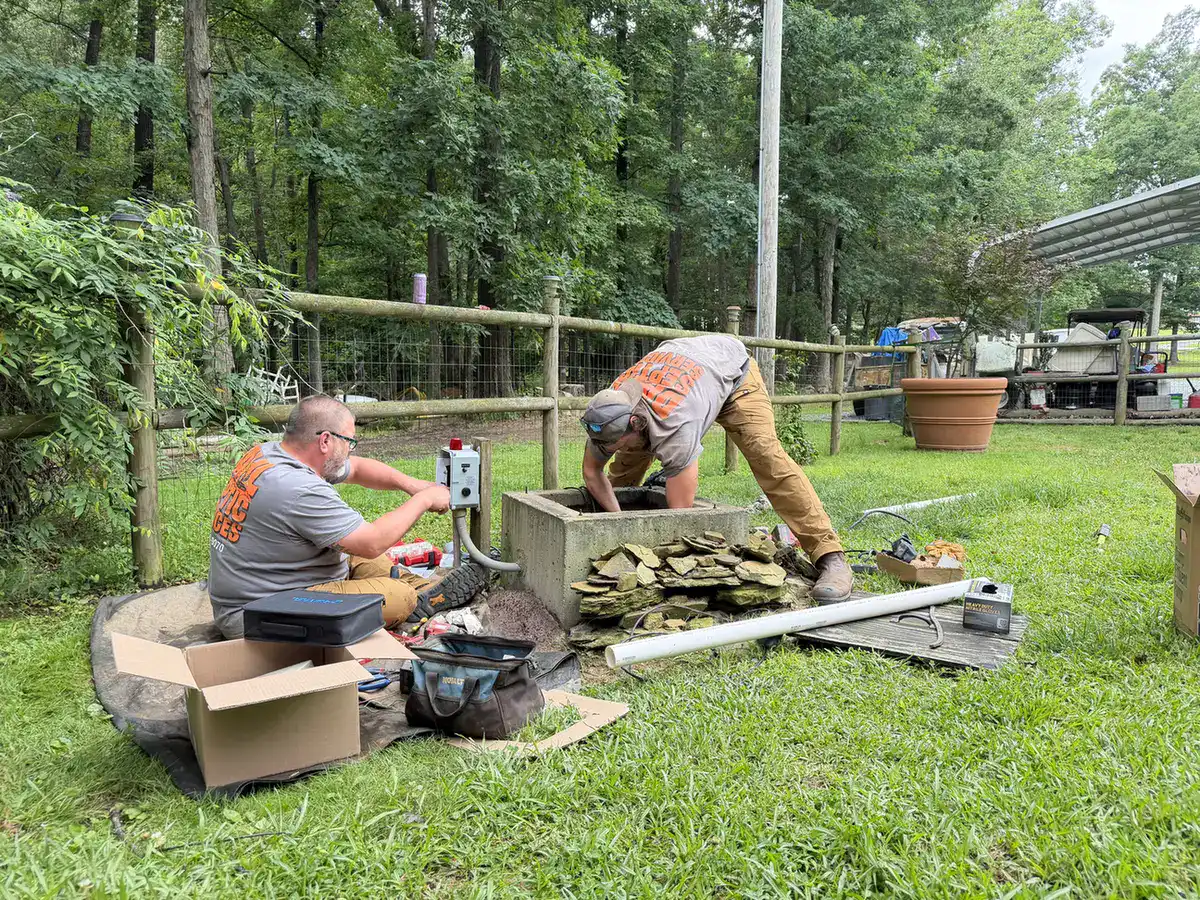
Every system is different, and each visit follows your permit and the system’s design. On a typical visit to an LPP, drip or pump-tank system, we check:
- Septic tank: sludge and scum levels, the baffles and the effluent filter, which we clean if it needs it
- Pump tank: the liquid level, any sludge, and signs of ground or surface water getting in
- Pump and floats: that the pump turns on and off at the right levels and the floats move freely
- High-water alarm: that it sounds and lights when the float rises
- Control panel: switches, breakers, timers and wiring, plus run-time and cycle counter readings where the panel has them
- Dosing: how much the pump delivers per dose and how fast the tank draws down, compared with the design
- LPP laterals: the pressure at the end of each line, read as squirt height, and flushing the lines when solids build up
- Drip components: the filters, flush and air-release valves, zone valves and controller settings
- Risers, lids and valves: sealed, secure and easy to reach
- Drain field: wet spots, surfacing effluent, erosion, roots or traffic damage
After the visit you get a written report of what we found. A check shows how the system is working that day; it can’t predict how long a part will last.
North Carolina rules
Why NC Requires a Certified Subsurface Operator for LPP, Drip and Pump Systems
North Carolina’s on-site wastewater rules (15A NCAC 18E, Section .1300) sort septic systems by type and say who maintains each one. A conventional gravity system is the owner’s to look after. A system with a single pump can be maintained by the owner or a certified operator. LPP systems, systems with more than one pump and drip systems must be managed by a certified operator, or a public management entity that has one, and inspected at least as often as the rules set for that system type. Pretreatment systems have extra rules, covered below. The requirement applies to systems installed or repaired since July 1, 1992, and to all drip and pretreatment systems.
The operator has to be certified as a subsurface operator by the NC Water Pollution Control System Operators Certification Commission, which requires an approved training school and a state exam.
For those systems, the rules also require a written operation and maintenance contract between the owner and the operator before the county issues the Operation Permit, and the contract stays in effect for as long as the system is in use. The operator inspects on the required schedule, sends a report to the owner and the county health department, and lets the county know when a repair is needed or when a contract isn’t renewed.
State minimums by system type
| System type (state rule) | Who maintains it | Operator inspections (state minimum) | County compliance inspection |
|---|---|---|---|
| Conventional gravity system | Owner | None set | None set |
| Single pump or siphon (Type IIIb) | Owner or certified operator | Every 5 years if an operator manages it | Every 5 years if the owner manages it |
| LPP distribution (Type IVa) | Certified operator | 2 a year | Every 3 years |
| More than one pump or siphon (Type IVb) | Certified operator | 2 a year | Every 3 years |
| Drip dispersal, up to 1,500 gallons a day (Type Vd) | Certified operator | Quarterly in the first year, then 2 a year if the system is in compliance | Once a year |
| Pretreatment, up to 1,500 gallons a day (Type Va) | Manufacturer or an operator it authorizes (brand-name units) | Quarterly in the first year, then 2 a year if the system is in compliance | Once a year |
From Table XXXII of 15A NCAC 18E .1301. These are state minimums for the system type; your Operation Permit can set more, and larger systems have higher minimums. Under 18E .1304, the operator’s inspection report goes to the owner and the county health department no later than 30 days after each inspection.
The county health department also inspects these systems on its own schedule. Those compliance inspections are separate from your operator’s visits, and you don’t book them.
Our team includes a certified subsurface operator, so we can handle the scheduled operator visits and reports your engineered system requires. Union County Environmental Health posts a certified operator list on its septic systems page, and our operator is on it.
Your Operation Permit lists how your system is classified and what it needs. If you don’t have your permit, the county’s septic records may, and we can help you look.
Sources: 15A NCAC 18E .1301, 18E .1302, 18E .1303 and 18E .1304; NC State Extension, Septic System Owner’s Guide; NC DEQ operator certification.
LPP systems
LPP Septic Maintenance
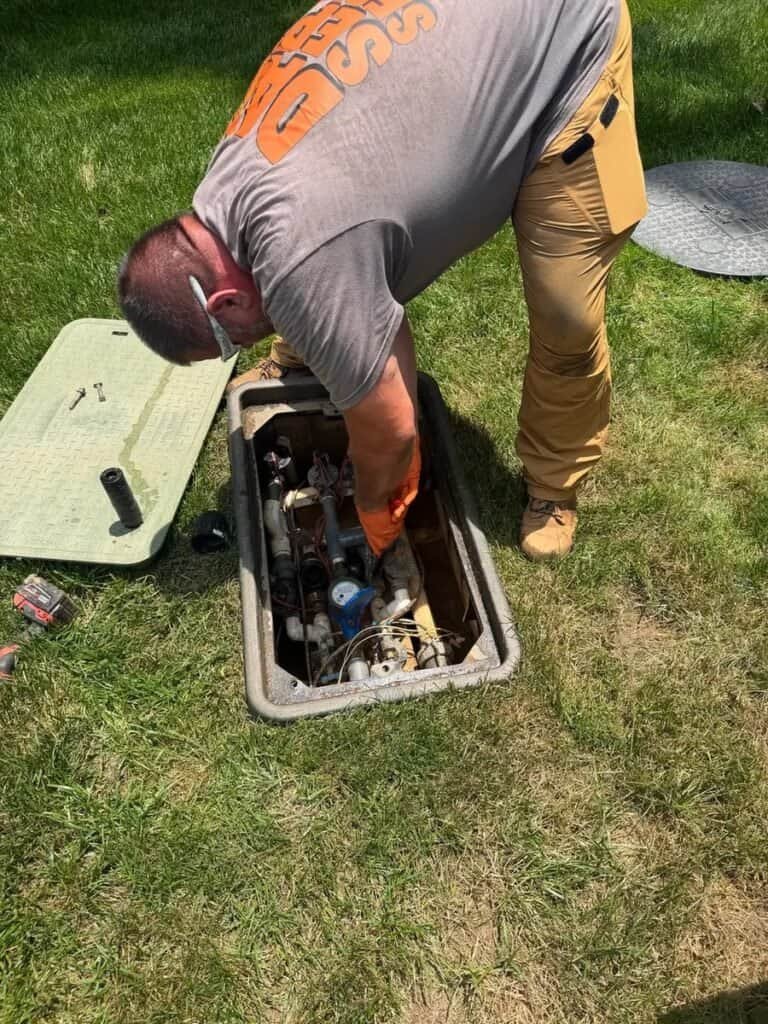
A low-pressure pipe (LPP) system pumps effluent from a pump tank through small pipes with drilled holes, spreading it evenly across the drain field. Even spreading depends on the pump, the pressure and clean holes, so an LPP maintenance visit focuses on those:
- Watching a full dose cycle, so we can see the floats turn the pump on and off at the right levels
- Measuring the squirt height at the end of each lateral and comparing it with the design. A higher reading can mean clogged holes; a lower one can point to a worn pump or a leak
- Flushing the laterals through the turn-ups when solids build up, then resetting the pressure
- Checking the pump tank, the high-water alarm, the control panel and the effluent filter
- Walking the drain field for wet spots or effluent that surfaces when the pump runs
Drip systems
Drip Septic System Maintenance
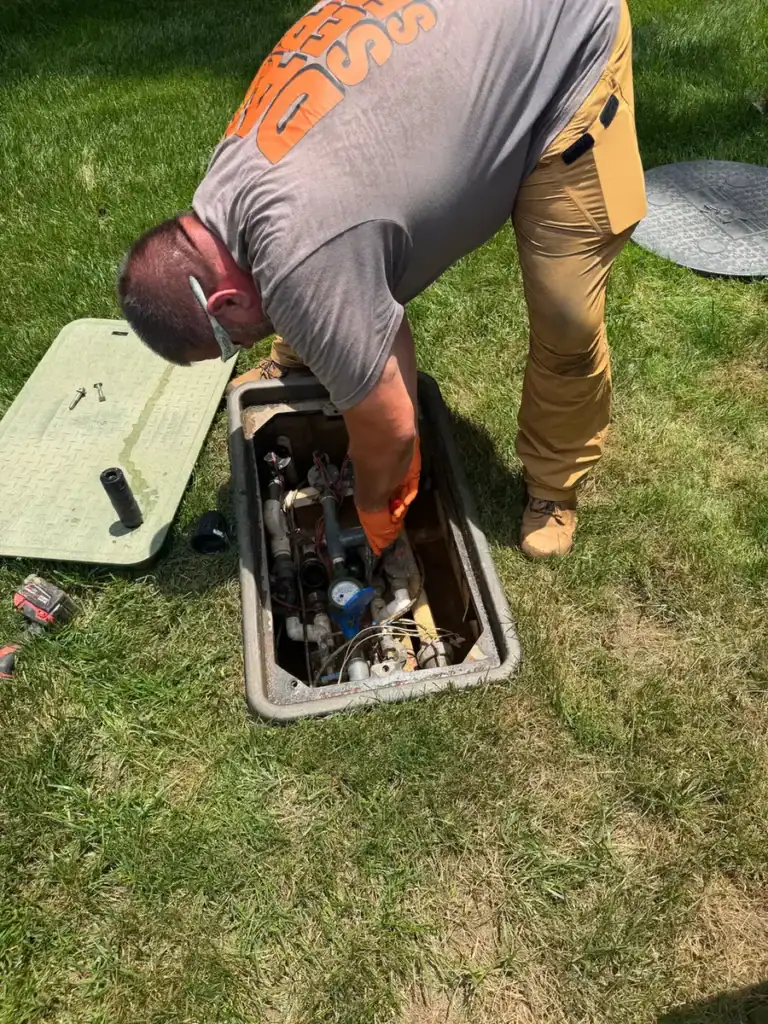
Drip systems send small, measured doses of effluent through tubing just below the surface. They work on sites where other systems can’t, but the tubing has tiny emitters, so the filters and flushing have to keep up. Many drip systems also have a pretreatment unit ahead of the field; if yours is a brand-name unit, that unit’s maintenance has to be done by the manufacturer or an operator it authorizes in writing. A drip maintenance visit covers:
- Cleaning or checking the filters
- Checking the flush and air-release valves, and flushing the field lines
- Checking the zone valves and the controller’s dosing settings
- Checking the pump tank, pump, floats and alarm
- Looking over the field for wet spots, exposed tubing or animal damage
Pump tanks
Pump Tanks, Floats and Alarms
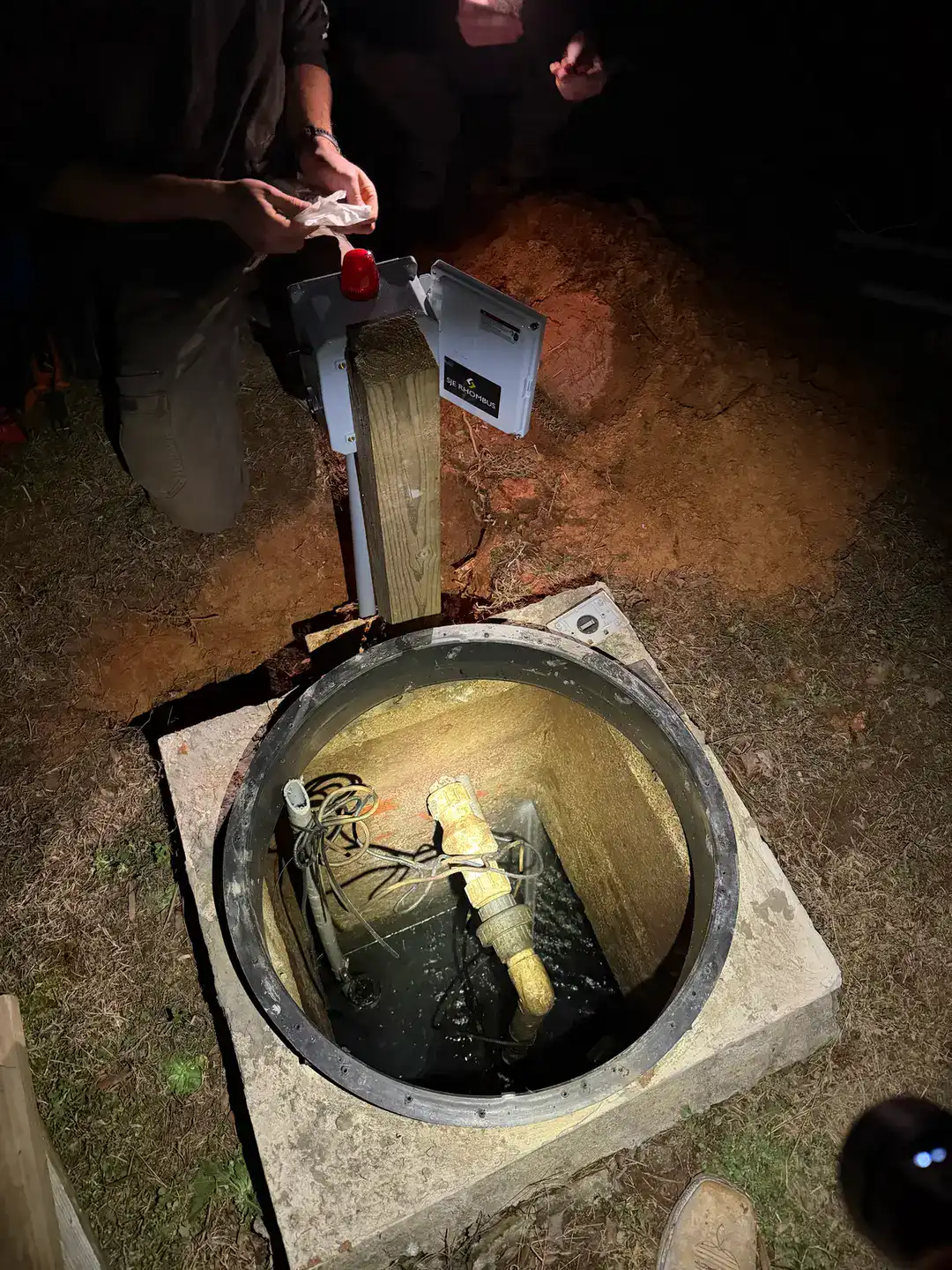
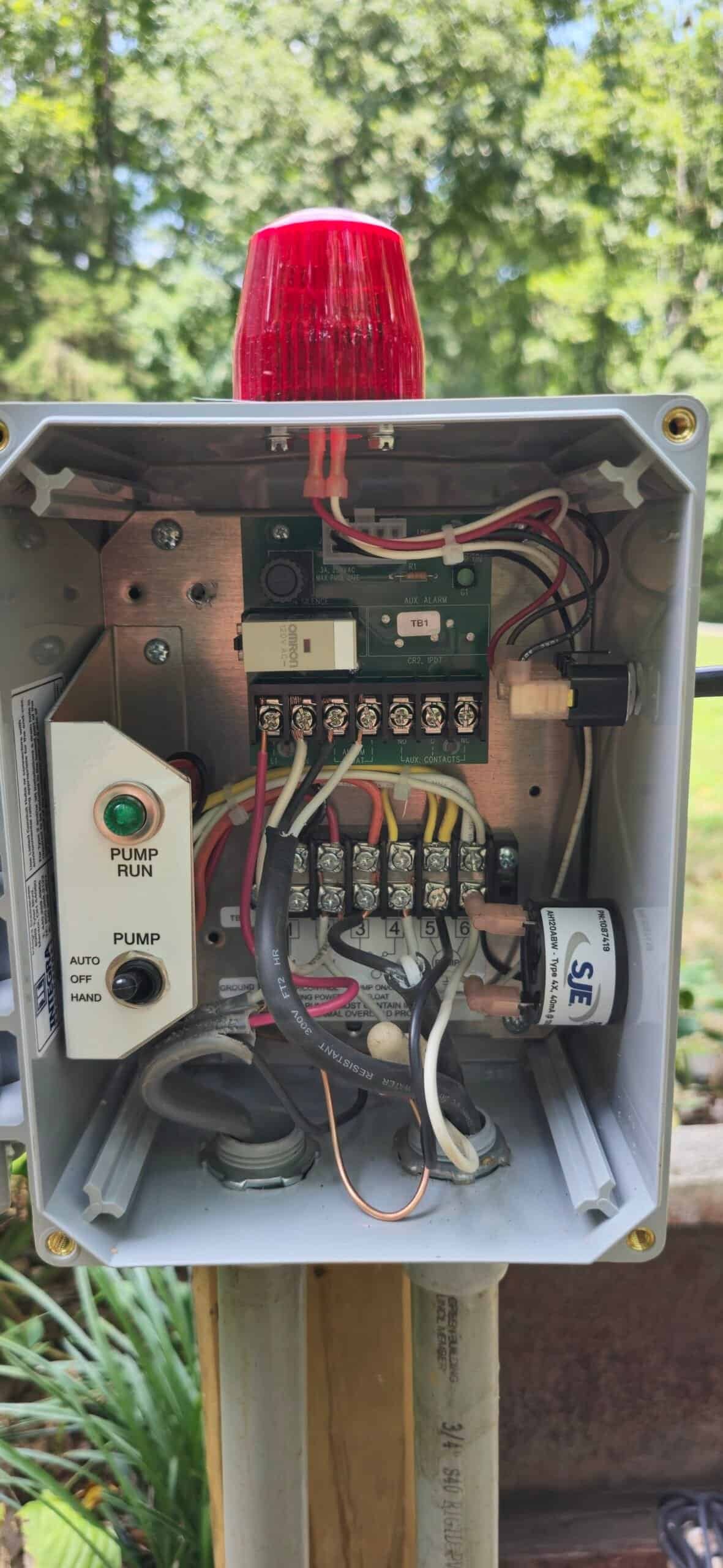
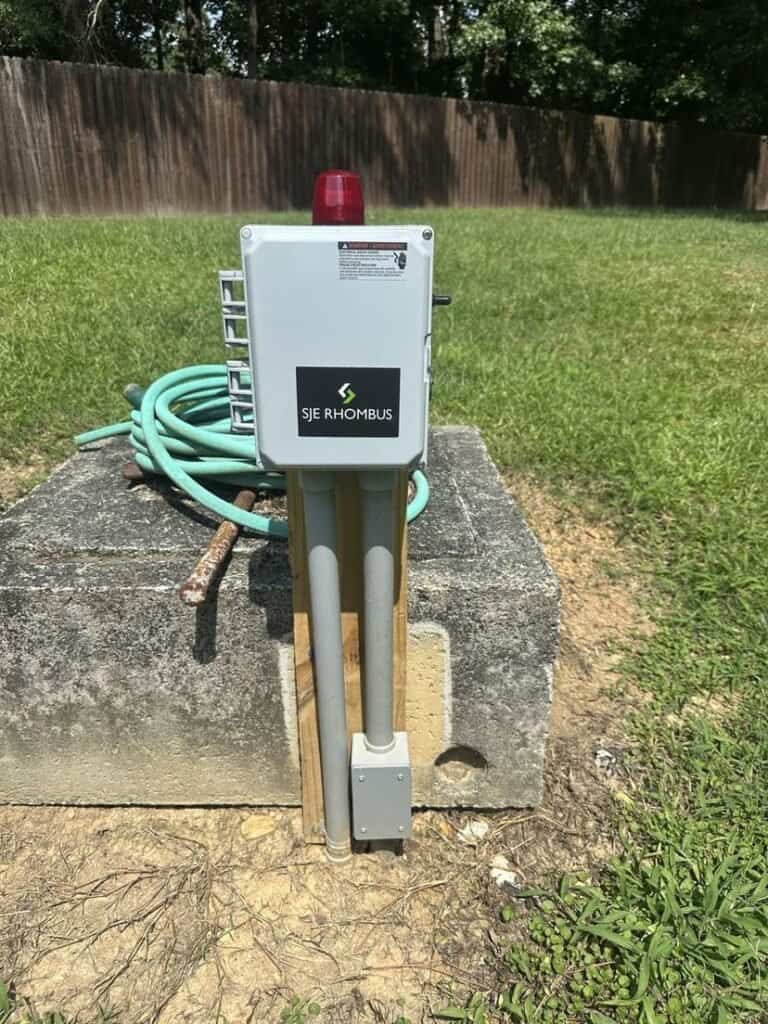
Any system with a pump tank depends on the pump, the floats that turn it on and off, and the alarm that warns you when the water is too high. When the alarm goes off, cut back on water use and call or text us. We test, repair and replace pumps, floats, alarms and control panels. When we replace a part as your operator, we report it as the rules require.

Something already wrong? See septic repairs.
Pretreatment systems
Pretreatment Systems Have Their Own Maintenance Rules
Some lots need the effluent treated further before it reaches the field, with a pretreatment unit such as a media filter or an aerobic treatment unit. North Carolina requires an operation and maintenance contract for these before the Operation Permit is issued. For brand-name (proprietary) units, the rules say the contract has to be with the manufacturer, its representative, or an operator the manufacturer has authorized in writing.
If you have a pretreatment unit, check its paperwork or ask the manufacturer who is authorized to maintain it. Some permits also call for effluent samples, which go to a certified lab.
Conventional systems
Conventional Septic Tank Maintenance
A conventional system needs less, but it still needs care:
- Pump the tank every 3 to 5 years for most homes, sooner with a large household or a garbage disposal. Septic tank pumping
- Clean the effluent filter if your tank has one. We check it whenever we pump.
- Keep grease, wipes and chemicals out of the drains, and spread out laundry and other heavy water use.
- Keep vehicles and new construction off the drain field.
- Have the system inspected when you buy or sell a home, or if you notice slow drains, odors or wet spots. Septic inspections
Between visits
Warning Signs Between Maintenance Visits
Your operator visits on a schedule, but you live with the system every day. Call or text us if you notice:
- The alarm sounding, or a red light on the control panel
- Sewage or wet, smelly spots in the yard, especially right after the pump runs
- Slow drains or gurgling, especially after rain
- Sewage backing up into the house
- A pump that seems to run all the time, or never
Habits that help an engineered system
- Spread out laundry and other heavy water use, and fix running toilets and dripping faucets
- Keep grease, wipes, medicines and harsh chemicals out of the drains
- Keep cars, equipment, sheds and pools off the tanks and the field
- Keep grass growing over the field, and send gutter and downspout water away from it
- Leave the power to the pump and alarm on, and call us rather than just silencing an alarm
- Never open or climb into a septic or pump tank. The gases inside can be deadly
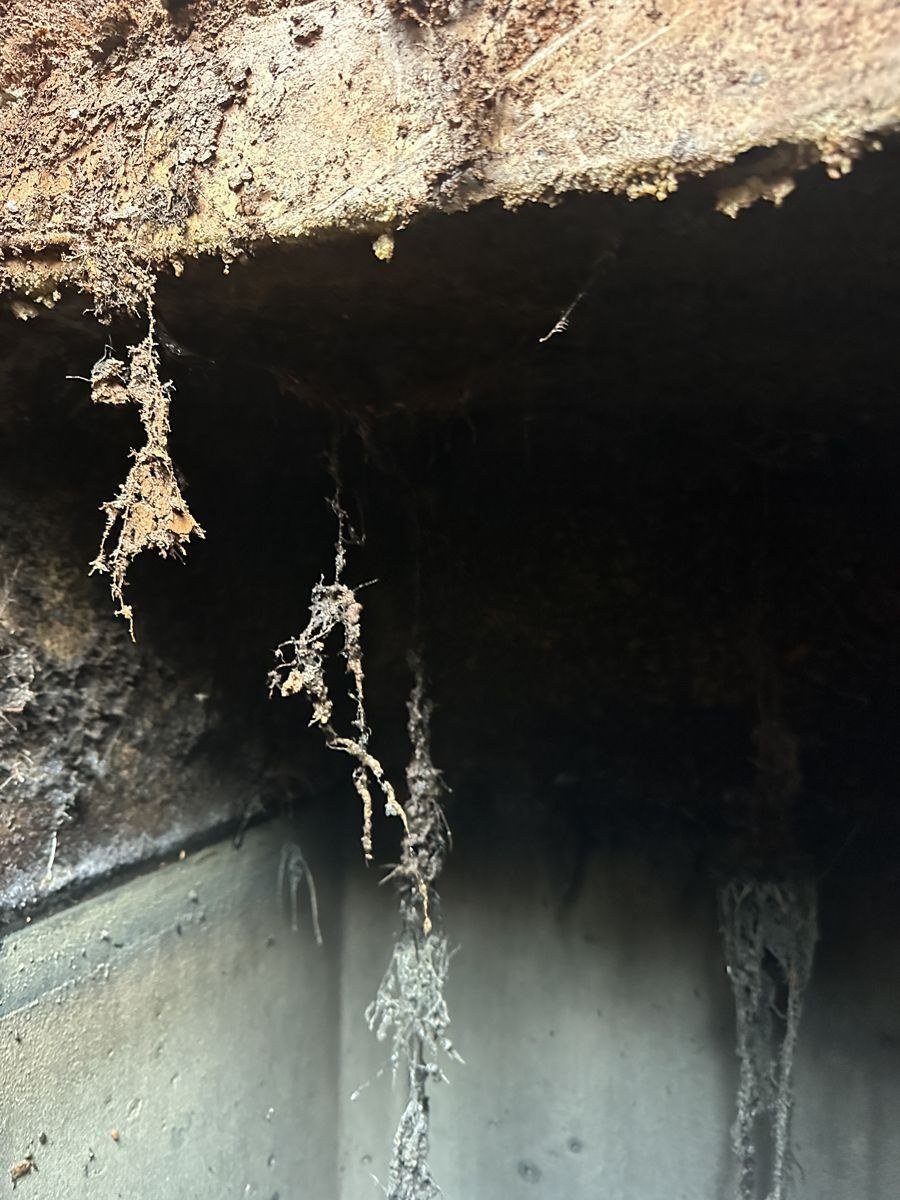
Recent jobs
Job note: Tree roots found growing into a septic tank
- Tank: concrete
- Problem: tree roots had grown in at the top of the tank
- Found while the tank was open for service
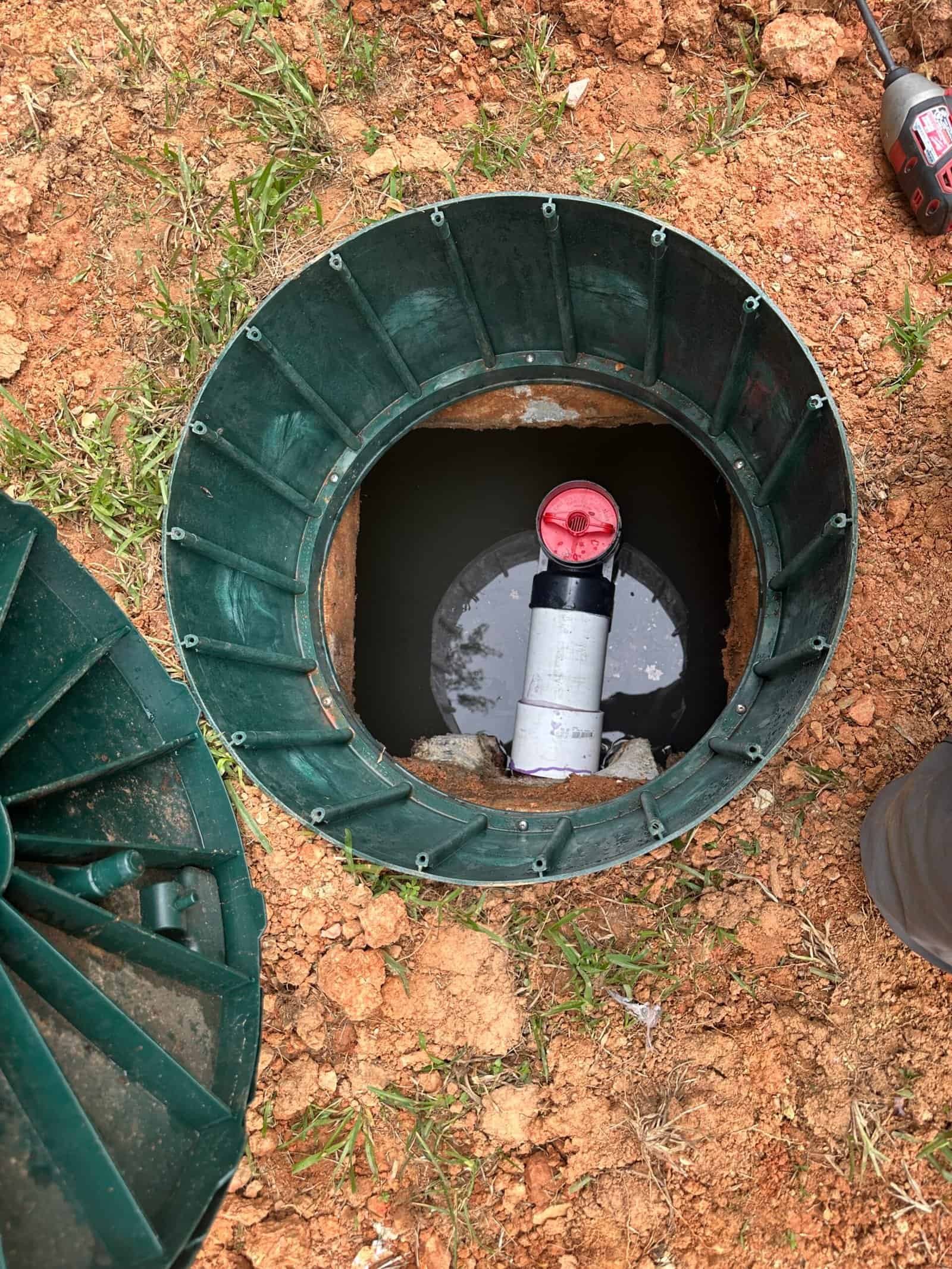
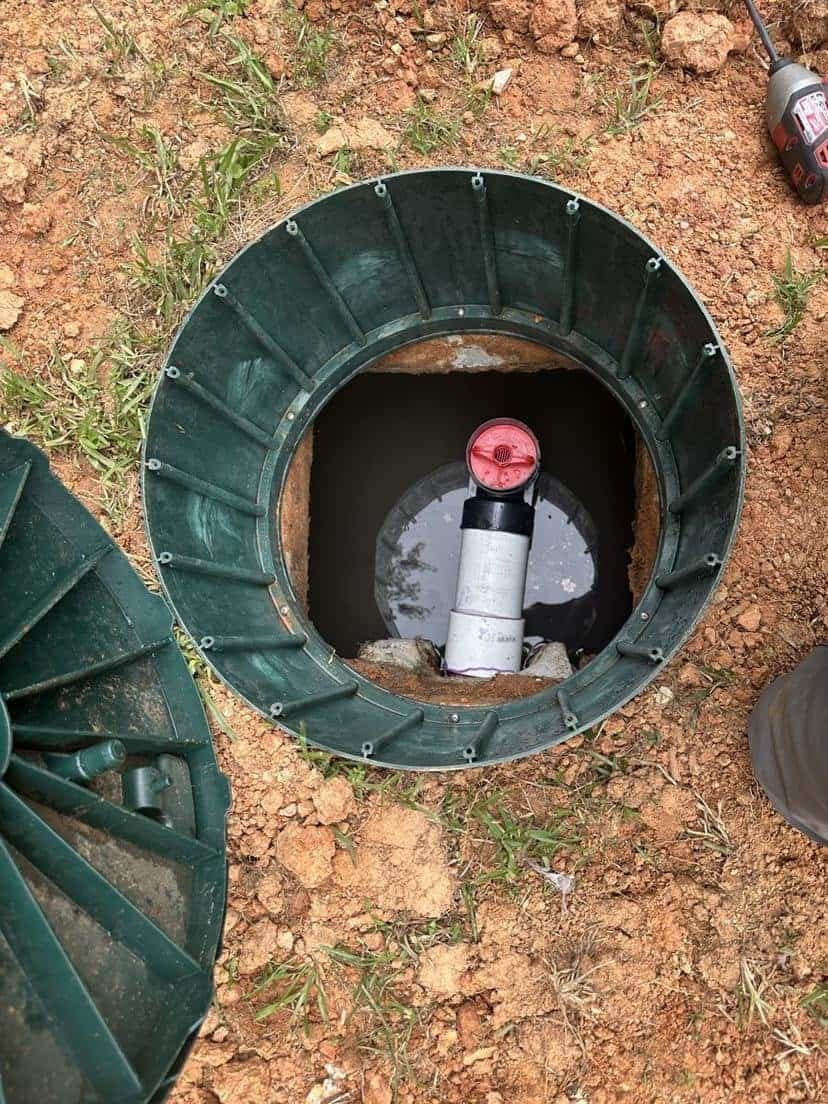
Job note: Effluent filter checked through the riser
- Tank access: a plastic riser at ground level
- Goal: get to the effluent filter at the tank outlet
- Work: we opened the riser lid and checked the filter
Union County
LPP and Drip Septic Maintenance in Union County, NC
Much of Union County sits on the Carolina Slate Belt, where shallow soils can mean LPP, drip or pump-tank systems. Union County Environmental Health (704-283-3553) runs the state-mandated operation and maintenance program, which inspects LPP, pretreatment and pump systems on a schedule.
Required O&M inspection coming up, or a county notice about your operator contract? Call or text us. We maintain systems in Monroe, Indian Trail, Waxhaw, Weddington, Wesley Chapel, Marvin, Mineral Springs, Unionville, Fairview, Hemby Bridge, Marshville and Stallings.
Stanly County
LPP and Drip Septic Maintenance in Stanly County, NC
Shallow, rocky soil in parts of Stanly County can call for pump-tank, LPP or drip systems. Septic permits and records come from Stanly County Environmental Health in Albemarle (704-986-3675), and our office is in Albemarle too.
We maintain systems in Albemarle, Locust, Stanfield, Oakboro, Red Cross, Norwood, Badin, New London, Richfield and Misenheimer.
More counties
Septic Maintenance in Mecklenburg, Cabarrus, Anson and Montgomery Counties, NC
We also maintain LPP, drip and pump-tank systems in Mecklenburg, Cabarrus, Anson and Montgomery counties. Each county health department runs its own inspections, and your Operation Permit says what your system needs. In Mecklenburg County, ask Mecklenburg County Public Health how management of your system is set up, since the rules let a county act as the management entity when its board of health authorizes it.
- Mecklenburg County: Charlotte, Matthews, Mint Hill and Huntersville
- Cabarrus County: Concord, Kannapolis, Harrisburg, Midland, Mount Pleasant and Georgeville
- Anson County: Ansonville and Morven
- Montgomery County: Troy, Biscoe, Mount Gilead and Candor.
Get started
Start a Septic Maintenance Contract
Tell us what kind of system you have, if you know, and when it was last checked. Call or text (704) 218-9070, book online, or request a quote. We’re open Monday to Friday, 8am to 5pm, and accept cash, credit cards and checks.
FAQ
Septic maintenance questions
Does my LPP or drip system need a maintenance contract?
Usually, yes. Under North Carolina’s rules, LPP systems installed or repaired since July 1, 1992, and drip systems, need a certified operator under a written operation and maintenance contract. Your Operation Permit lists what your system needs.
Do you have a certified subsurface operator?
Yes. Our team includes a certified subsurface operator, so we can handle the scheduled inspections and reports that LPP, drip and other engineered systems require.
What is a subsurface operator?
A subsurface operator is certified by the NC Water Pollution Control System Operators Certification Commission to operate and maintain septic systems such as LPP, drip and pretreatment systems. Certification takes an approved training school and a state exam.
What’s included in a septic maintenance contract?
Operator visits as your permit or system requires, a check of the tanks, pump, floats, alarm, controls, filters, lines and field on each visit, a written report filed as the rules require, and routine upkeep such as cleaning filters and flushing lines. If something needs repair, we explain it and quote it first.
How do I start a maintenance contract?
Call or text (704) 218-9070, or book online. We ask for your address and system type, check the system, then set up the contract and the paperwork the county asks for.
I got a notice from the health department about my operator contract. What do I do?
Don’t set it aside. Notices like this often mean the county has no current operator contract or recent operator report on file for your system. Call or text (704) 218-9070, have the notice and your Operation Permit handy if you can, and we’ll check the system and set up the contract and paperwork the county asks for.
My operator contract lapsed or my old operator stopped coming. Can you take over?
Yes. The rules require the county to be told when a contract ends, so put a new one in place soon. We start with a full check, because a system that has gone without visits can have a failed float, a clogged line or an alarm that no longer works.
How often does an LPP or drip system need to be inspected?
As often as your permit or system requires. Under the state rules, LPP systems and systems with more than one pump need at least 2 operator inspections a year, plus a county compliance inspection every 3 years, and smaller drip systems start with quarterly operator inspections in the first year. Your Operation Permit lists what yours needs.
Can I maintain my own LPP system?
North Carolina lets a homeowner become certified to operate only their own system by completing the subsurface operator training school and passing the state exam. Otherwise, the system needs a certified operator under contract.
I’m buying a house with an LPP or drip system. What should I ask for?
Ask for the Operation Permit, the current operator contract and recent operator reports. A home-sale septic inspection checks the tank, pump, floats and alarm, and after closing you’ll need a contract in your name.
Do you maintain pretreatment units?
Brand-name pretreatment units have to be maintained by the manufacturer, its representative or an operator the manufacturer authorizes in writing, so check your unit’s paperwork first. We maintain LPP, drip and pump-tank systems, and we can help you read what your Operation Permit requires.
What should I do when my septic alarm goes off?
The alarm usually means the water in the pump tank is higher than it should be. Cut back on water use and call or text (704) 218-9070.
How often should a conventional septic tank be pumped?
Most homes every 3 to 5 years. A large household, a garbage disposal or heavy water use means sooner.
Which counties do you cover for septic maintenance?
Union, Stanly, Mecklenburg, Cabarrus, Anson and Montgomery counties in North Carolina, including LPP, drip and pump-tank systems. Our office is in Albemarle.
Real Google reviews
5-star Google reviews
Three of our five-star Google reviews, quoted as posted:
★★★★★
“5 Stars, will use Dahl again next time. Great guys who responded quickly, professional, did great work, and educated me about my system. They pumped my tank and replaced my effluent pump. I highly recommend!”
Google review
★★★★★
“I would recommend Dahl Septic Services to anyone! They were very professional and got us on their schedule in a very timely manner. They helped us pump out a septic system and do a septic inspection on a new home! We can’t thank them or recommend them enough”
Google review
★★★★★
“They came to do a new septic system for my dad and they went above and beyond what we expected. Long long customer for us for any of our septic needs”
Google review
Blog
Septic Tips from Dahl Septic
Failed Septic Inspection in NC: What Happens Next
You’re under contract on a house in Union, Stanly or Mecklenburg County, the septic inspection report just landed, and it isn’t good news. Maybe the tank has a cracked baffle, roots are growing into the lid, or the drain field shows signs of trouble. Whether you’re the buyer, the seller or the agent, a failed…
Selling a House With a Septic System in NC: What to Do Before You List
If your home in Union, Stanly or Mecklenburg County runs on a septic system, the buyer is going to ask about it. Their lender, their agent and their home inspector will too. Sellers who get the septic side sorted out before the listing goes live usually have a smoother due diligence period and fewer surprises…
Septic Tank Pumping: What to Expect and How to Prepare
If you’ve never had your septic tank pumped, or can’t remember the last time, it helps to know what the visit looks like. Here’s what happens from the phone call to the moment the truck pulls away, and what you can do ahead of time to make it go smoothly. It’s written for homeowners in…
Dahl Septic Services
Call, text or book online
214-B E North St, Albemarle, NC 28001 · Mon–Fri 8–5
Closed Thanksgiving (Thu, Nov 26) and Christmas (Fri, Dec 25).
Visit
Dahl Septic Services
214-B E North St
Albemarle, NC 28001
Call or text
Hours
Mon–Fri 8–5
Closed Thanksgiving (Thu, Nov 26) and Christmas (Fri, Dec 25).