Installing a septic tank and leach field in North Carolina can quickly become confusing when costs start piling up. You want a clear picture of what drives the septic tank installation cost before committing. This guide breaks down the key expenses, from permits to land clearing, so you know what to expect and can make smart choices for your property in Albemarle and nearby areas. For a comprehensive understanding of these costs, you might find this article helpful.
Understanding Septic System Costs
Getting a handle on septic system costs can save you money and stress in the long run. It’s crucial to know what influences these expenses, the typical line items you might encounter, and how different system types compare in terms of cost.
Factors Influencing Installation Costs
Multiple factors contribute to the cost of installing a septic tank and leach field. The size of your property, soil type, and location all play a role. In North Carolina, the soil and terrain can vary significantly, affecting the cost. For instance, rocky terrain or clay-rich soil could require more labor and specialized equipment, increasing costs.
Expect to pay for permits, which vary by county. A perc test, vital for determining soil absorption, also adds to the expense. In some areas, the perc test cost in NC might range from a couple of hundred dollars to over a thousand.
Common Line Items and Variables
Once you’ve grasped the influencing factors, it’s time to dive into specific costs. Key expenses include the septic tank itself, leach field materials, labor, and site preparation. The tank’s material—concrete, plastic, or fiberglass—can affect the price, with concrete typically being more expensive.
Line items like land clearing and excavation can add hundreds to thousands of dollars to your bill. According to Angi’s cost guide, expect drain field installation costs to vary depending on the size and complexity of the project.
Comparing System Types and Costs
Different types of septic systems come with distinct costs. Traditional gravity-fed systems are generally less expensive compared to pump or mound systems. A gravity vs. pump septic system comparison shows that pump systems might cost more upfront but can be necessary for properties without natural slopes.
Advanced treatment units or eco-friendly septic systems could also entail higher initial costs but offer benefits like reduced environmental impact. The decision depends on your property’s needs and your commitment to green solutions.
Steps to a Successful Installation
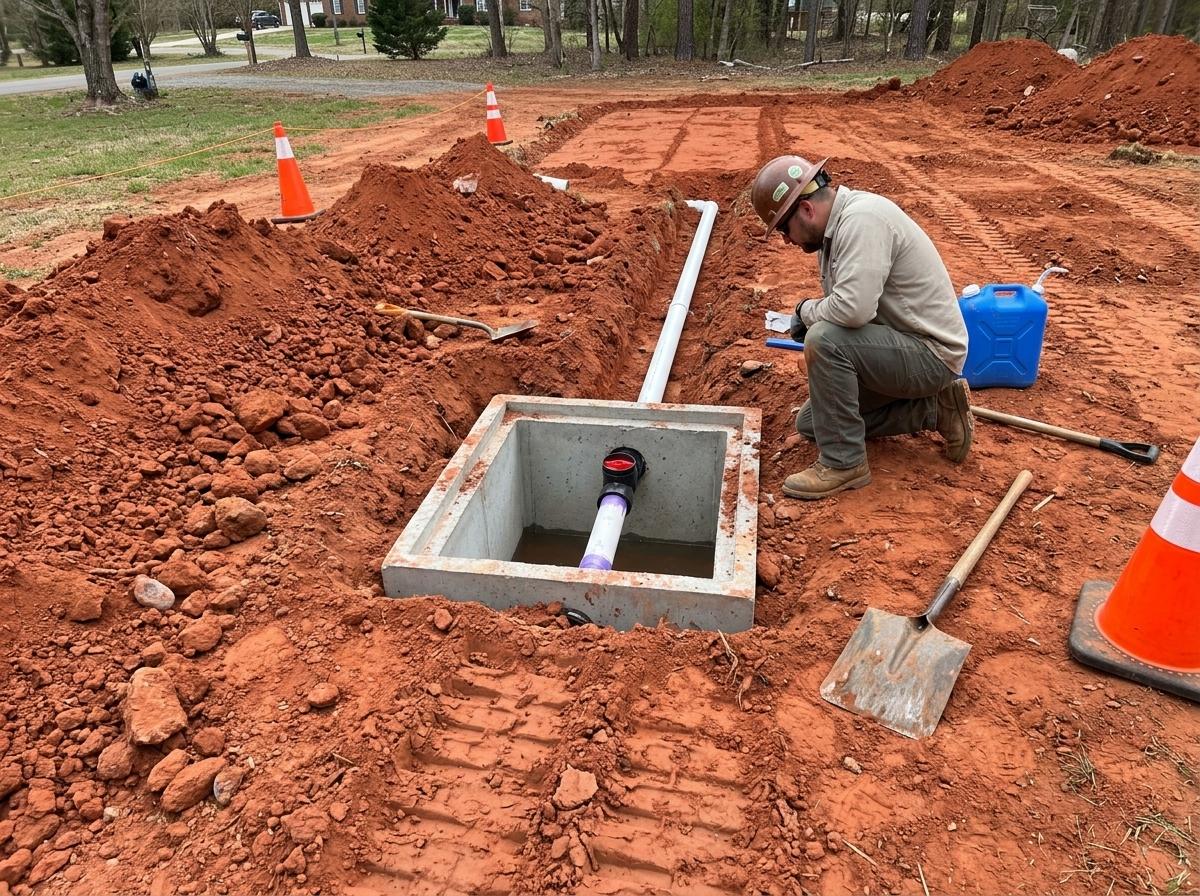
Understanding the costs sets the stage for a successful installation. Next, focus on the steps needed to ensure everything goes smoothly from start to finish, starting with a crucial site assessment.
Importance of Site Assessment
The success of your septic system begins with a detailed site assessment. Before any installation, experts evaluate your property to determine the best system type and placement. A thorough site assessment helps avoid surprises and ensures compliance with local regulations.
In North Carolina, site assessments consider soil type, slope, and proximity to bodies of water. This process helps prevent future issues and is a smart investment for peace of mind.
Navigating Permits and Design
Permits are a necessary step in the installation journey. Understanding what permits you need and how to obtain them can speed up the process. Different counties have specific requirements, and fees can vary.
Designing your septic system involves working with professionals to tailor it to your property’s unique needs. This stage includes choosing the system type and planning for future expansions or modifications, ensuring your septic system meets your household’s demands.
Scheduling with Dahl Septic Services
If you’re ready to move forward, scheduling with a reliable septic service provider is key. Dahl Septic Services, known for their expertise and customer-centric approach, offers a full range of services from installation to maintenance.
Choosing a local provider ensures they understand North Carolina’s specific needs and regulations. You can rely on their experience to guide you through each step, ensuring a smooth installation process.
Frequently Asked Questions
What impacts the cost of septic tank installation in North Carolina?
The cost is influenced by factors like property size, soil type, and location. Additional expenses include permits and necessary tests like a perc test.
How do different septic systems compare in cost?
Traditional gravity systems are usually less expensive than pump or mound systems. Eco-friendly and advanced treatment units may come with higher initial costs but offer long-term benefits.
Why is a site assessment important before installation?
A site assessment evaluates your property to determine the best system type and placement, helping avoid future problems and ensuring compliance with regulations.
What permits are needed for septic installation in North Carolina?
Permit requirements vary by county but generally include a septic permit and possibly a building permit, depending on local regulations.
How can Dahl Septic Services assist with septic installation?
Dahl Septic Services offers comprehensive septic solutions, from site assessment to installation and maintenance, ensuring your system is installed correctly and efficiently.