Most homeowners don’t realize how their septic system works until trouble strikes. A clear septic system diagram breaks down each part, showing how wastewater flows and where issues can start. Understanding these components helps you stay ahead with proper maintenance and avoid costly repairs. Keep reading to learn how your septic tank components work and why early inspections matter in North Carolina.
Understanding Your Septic System
Knowing the details of your septic system can save you from unexpected and costly problems. A septic system diagram reveals how everything fits together under your yard.
Key Septic Tank Components
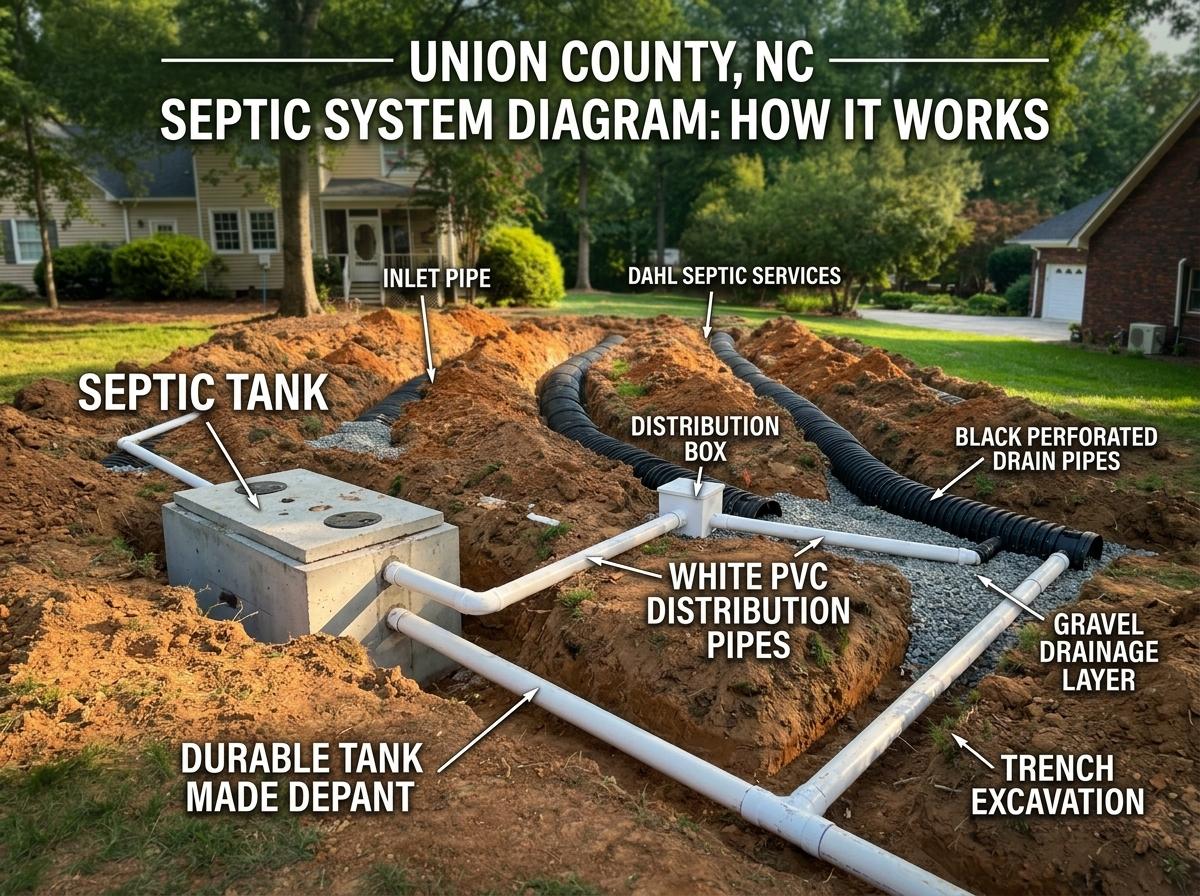
Your septic tank has several important parts. First, the septic tank itself holds wastewater from your home. Inside, you’ll find baffles at the inlet and outlet, which control water flow and prevent scum from clogging pipes. Another critical component is the effluent filter, which keeps solids from entering the drain field. Outside the tank, the distribution box distributes treated water evenly to the drain field or leach field.
Each part has a role. Baffles ensure that only wastewater moves to the next stage. The effluent filter catches debris, reducing the risk of blockages. The distribution box then manages water flow to the drain field. This system relies on each part working correctly to process waste safely.
Wastewater Flow Process
Wastewater flow begins with your household drains. Whether it’s from your sink, shower, or toilet, water travels through pipes into the septic tank. Inside, solids settle at the bottom while grease and oils float to the top, forming a layer of scum. The middle layer, now mostly liquid, moves through the outlet baffle.
Next, wastewater reaches the distribution box. This component’s job is to send water equally into the drain field, where it seeps into the soil. The soil acts like a natural filter, cleaning the water before it re-enters the groundwater supply. Understanding this flow helps you spot potential trouble before it turns serious.
Maintenance Checkpoints and Tips
Routine checks can prevent expensive repairs. Inspect baffles and the effluent filter often. If they show signs of wear or clogging, clean or replace them as needed. Keep an eye on the distribution box, too. Uneven water flow can signal a problem.
Regular pumping is essential. Aim to pump your tank every 3–5 years. This keeps solids from building up, which can lead to backups. Follow a septic maintenance schedule to ensure every part of your system stays in good condition.
Common Septic System Issues
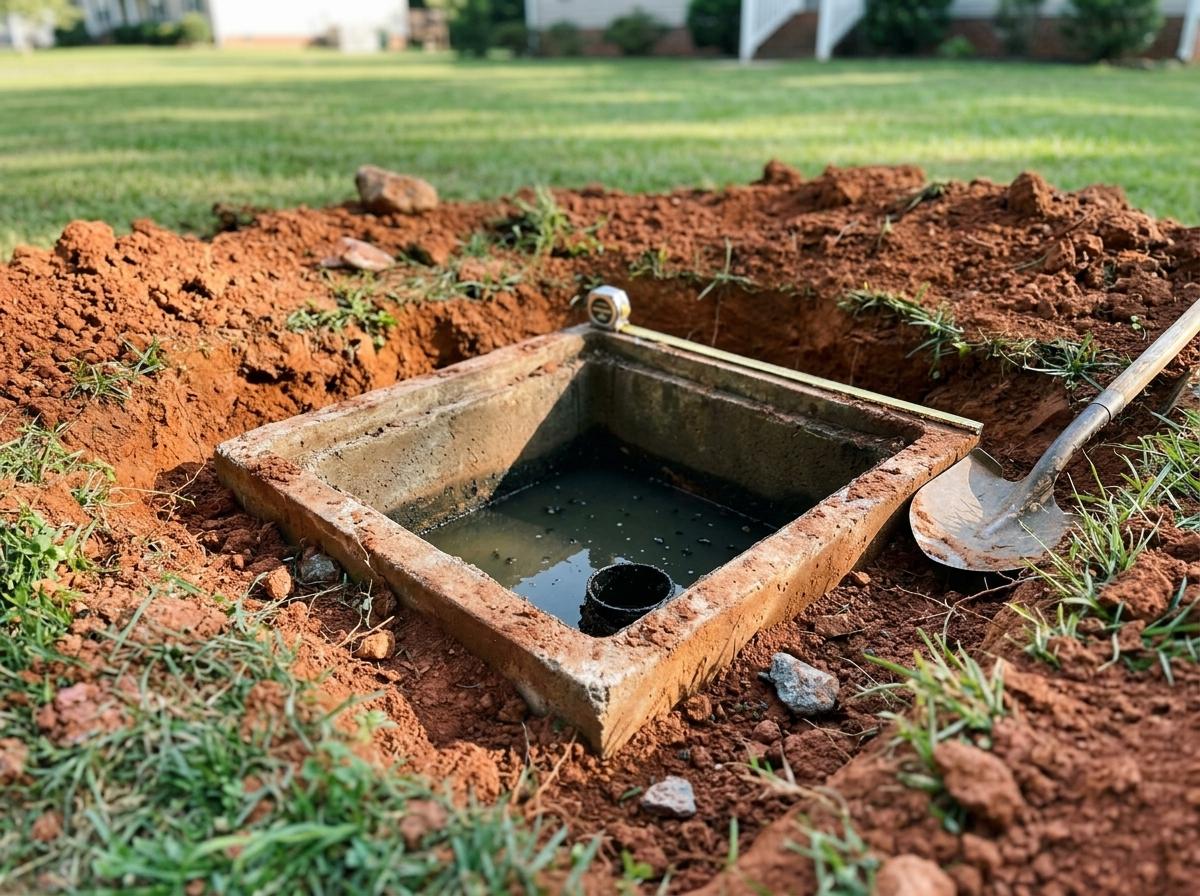
Without proper care, septic systems can develop various problems. Knowing what to watch for can keep your system running smoothly.
Identifying Failure Points
Problems often start at the inlet or outlet baffles. If these become blocked, wastewater flow can be disrupted. The effluent filter is another common failure point. A clogged filter can lead to backups, causing water to overflow into your home or yard.
The distribution box and drain field can also cause trouble. If the box distributes water unevenly, parts of the field may become oversaturated. This oversaturation can lead to system failure or environmental harm. Recognizing these issues early can help prevent major headaches.
Signs and Symptoms of Trouble
Watch for warning signs like slow drains, bubbling sounds, or unpleasant odors around your tank or yard. These can indicate blockages or leaks. Surface water pooling over the drain field suggests the field is not draining properly. If you notice any of these symptoms, it’s time to take action.
Ignoring such signs can lead to more serious problems. For instance, untreated wastewater can escape into the environment, posing health risks. Always address symptoms quickly to protect your home and the surrounding area.
Importance of Regular Inspections
Regular inspections help spot minor issues before they become big problems. A professional can assess each part of your system, ensuring everything functions correctly. They can also recommend when to clean or replace components.
In North Carolina, regular inspections are vital due to the region’s soil and weather conditions. They ensure your system complies with local regulations, protecting both your investment and the environment. Taking proactive steps now can save you from unexpected repairs later.
Professional Septic Services
Professional services offer peace of mind by ensuring your septic system remains reliable and efficient.
Benefits of Advanced Inspection Technology
Using advanced inspection technology gives you a clear view of your septic system’s health. Tools like cameras allow professionals to see inside pipes and tanks, identifying issues invisible to the naked eye. This approach ensures thorough checks, spotting potential problems with precision.
Advanced technology also means fewer disruptions to your property. By pinpointing issues accurately, repairs can be targeted, minimizing unnecessary digging or damage. This efficiency saves time and costs, making professional inspections a smart choice.
Eco-Friendly Septic Solutions
Eco-friendly solutions benefit both your home and the planet. Modern septic systems often use less water and process waste more efficiently than older models. They reduce the risk of contamination and support sustainable water use.
Choosing eco-friendly options aligns with environmental values while offering practical benefits. They typically require less maintenance and last longer, reducing long-term costs. Considering these solutions can make a significant impact on your home and community.
Scheduling Your North Carolina Septic Inspection
Now is the best time to schedule an inspection. Regular checks ensure your system runs smoothly, catching problems early. For residents in Albemarle, NC, and surrounding areas, professional services are readily available to help.
With expert guidance, you’ll know exactly what your system needs. From routine maintenance to eco-friendly upgrades, professionals provide clear advice and reliable service. Keep your septic system in top shape, protecting your home and environment with confidence.
Frequently Asked Questions
What are the signs my septic system needs maintenance?
Slow drains, gurgling sounds, and unpleasant odors can indicate issues with your septic system. Regular inspections can catch these early, preventing costly repairs.
How often should I pump my septic tank?
Pumping is typically recommended every 3–5 years, depending on your household size and usage. Regular pumping prevents solids from building up and causing backups.
Why is my drain field soggy?
A soggy drain field could mean it’s oversaturated, possibly due to uneven water distribution or blockages. This situation requires professional assessment to prevent environmental damage.
What does an inspection involve?
An inspection checks key components like baffles, the effluent filter, and the distribution box. It ensures your system functions properly and meets local regulations.
Are eco-friendly septic systems worth it?
Eco-friendly systems are efficient and sustainable, often requiring less maintenance and offering long-term savings. They are an excellent choice for environmentally conscious homeowners.